In the cannabis industry, the “spectrum” refers to the range of naturally occurring chemical compounds—such as cannabinoids, terpenes, and flavonoids—that are retained in a product after the extraction process.
Think of it as a scale of “completeness” relative to the original plant’s profile:
The Three Main Spectrums
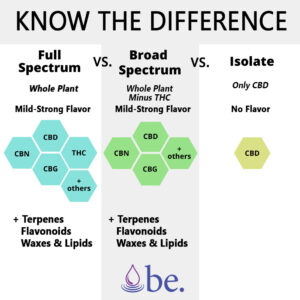
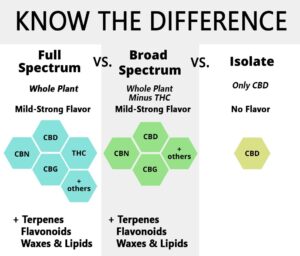
Full-Spectrum: Contains the entire chemical profile of the original plant, including a wide array of cannabinoids (THC, CBD, CBG, CBN) and aromatic terpenes.
THC Content: Always includes THC
Experience: Aims to provide a “whole-plant” experience that mimics smoking the flower itself.
Broad-Spectrum: Contains most of the plant’s natural compounds, but the THC has been intentionally removed or reduced to undetectable levels.
THC Content: Effectively THC-free, though trace amounts may occasionally remain.
Experience: Ideal for users who want the benefits of multiple plant compounds without the psychoactive effects or the risk of a positive drug test.
Isolate: The most refined form, where a single cannabinoid (usually CBD or THC) is isolated and all other plant compounds, terpenes, and flavonoids are stripped away.
THC Content: 0% (unless it is a pure THC isolate).
Experience: Provides a consistent, flavorless, and targeted dose of one specific molecule.
Why the Spectrum Matters: The “Entourage Effect”
The main reason users choose full- or broad-spectrum products is the entourage effect. This theory suggests that cannabis compounds work better together than in isolation, creating a synergistic result where the combined therapeutic benefits are greater than the sum of their individual parts.